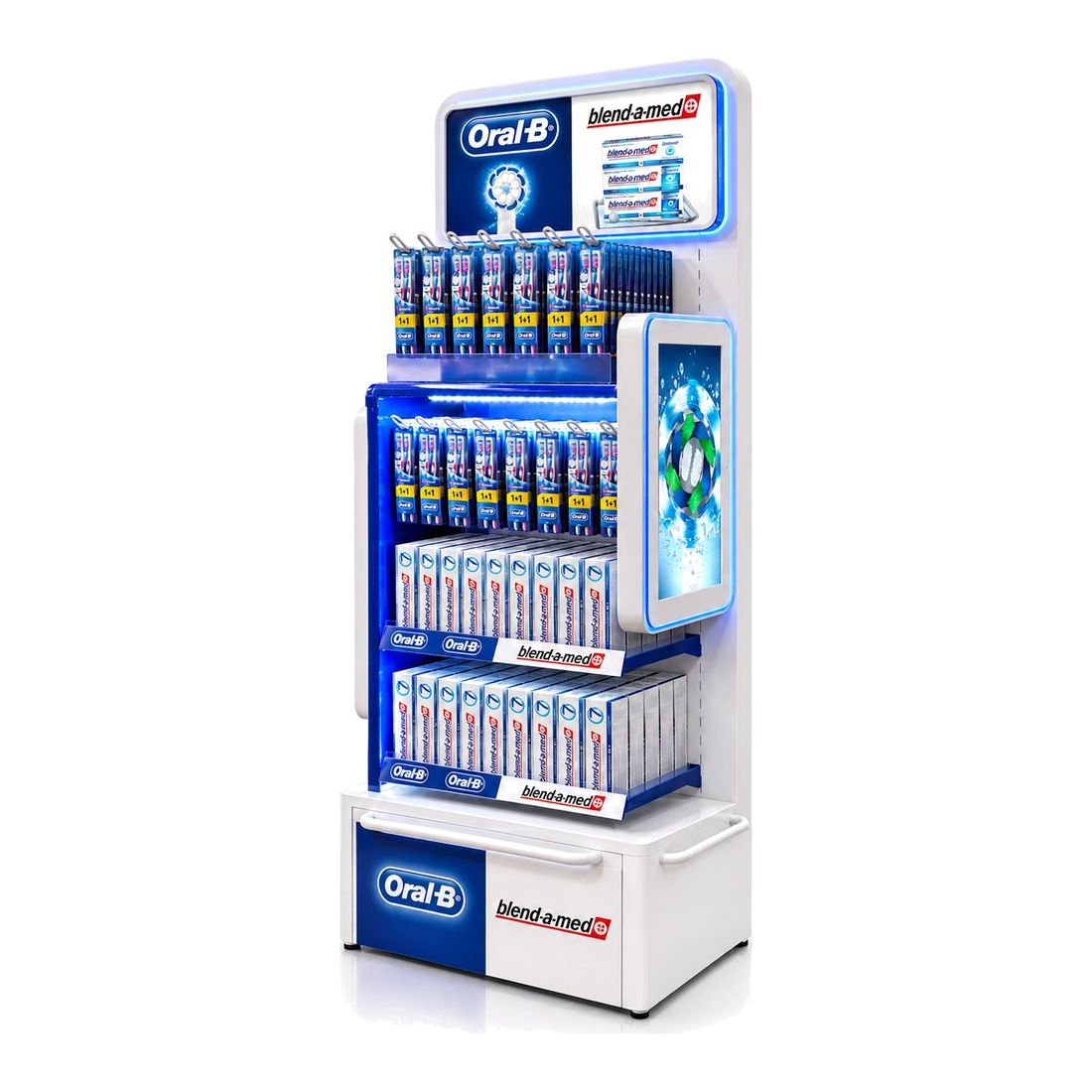
What we design
- Floor and counter displays – steel, wood, MDF or plastic, with space for interchangeable graphics.
- Brand shelving and fixtures – a permanent brand zone in the aisle or at the checkout, including shop-in-shop formats.
- Interchangeable elements – frames and cassettes into which new cardboard or plastic graphics are slotted for each campaign.
- Hybrid structures – a durable base and shelves, with cardboard toppers and in-store theatre for the duration of the promotion.
Cardboard or permanent?
| Cardboard | Permanent | |
|---|---|---|
| Display period | weeks, seasonal campaigns | months to years |
| Unit cost | low | higher, spread over years |
| Changing the message | new display | swap the frame graphics |
| Max load | up to a dozen-plus kg per shelf | high, even for heavy products |
| Logistics | flat, light | heavier, needs installing |
In practice, the best solution is increasingly a combination of both: a durable frame that stays in the store and light, inexpensive campaign elements that are replaced every few weeks.
How we work
We start with the product and the space in the store, prepare the structure and a 3D visualisation, then a prototype. Steel, wood and plastic components are produced with our partners, while we coordinate the whole project ourselves – including co-packing, delivery and installation.
Common questions
When does a permanent display pay off over a cardboard one?
When the display needs to stay in place for more than a few months, the product is heavy or the brand wants a permanent spot in the store. For short promotions, cardboard usually works out cheaper.
Can cardboard be combined with permanent materials?
Yes – it’s a common solution. The durable structure stays in the store, while the cardboard graphics and toppers change with each campaign.